Miami properties face extreme biological pressure from Rattus rattus (roof rats) and Mus musculus (house mice), which exploit subtropical humidity, dense ficus canopies, and architectural vulnerabilities. In historic…
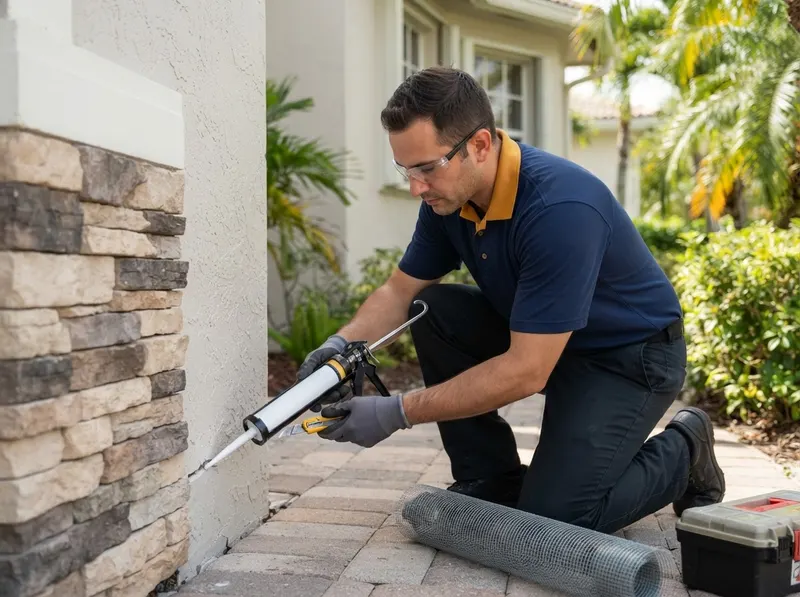
Miami properties face extreme biological pressure from Rattus rattus (roof rats) and Mus musculus (house mice), which exploit subtropical humidity, dense ficus canopies, and architectural vulnerabilities. In historic 1920s wood-frame bungalows across Coconut Grove and Silver Bluff, settling foundations and crawlspace piers create open subterranean corridors. Modern residential towers and mixed-use commercial sites in Brickell and Edgewater present a different challenge: expansion joints, utility chases, and vertical mechanical risers allow rodents to travel through entire structures unchecked. While simple snap traps or rodenticide baiting stations provide temporary population knockdown, they do not resolve the physical breaches that permit exterior populations to re-enter. Structural exclusion provides a permanent architectural boundary, replacing cyclical extermination costs with rigid mechanical denial.
Rodent exclusion is necessary when scratching, gnawing noises, or localized droppings emerge in soffits, drop ceilings, or wall cavities. In Little Havana and Coral Gate, roof rats routinely jump from overgrown mango or avocado branches directly onto barrel tile roofs, squeezing through unsealed tile eaves where standard pest treatments fail. In high-density industrial conversions across Wynwood and Allapattah, continuous overhead conduit junctions demand heavy-duty steel barriers. The fundamental operational trade-off of structural exclusion is upfront physical labor versus recurring chemical dependence: mechanical remediation requires an initial expenditure of time and specialized hardware, yet it permanently stops rodents from chewing electrical lines or nesting in air-conditioning plenum spaces without dispersing volatile chemicals indoors.
Structural remediation follows a disciplined sequence to isolate the interior envelope from the exterior environment:
1. Exterior structural auditing: Technicians inspect the building envelope from grade to roofline, recording every breach equal to or exceeding 1/4 inch around pipe sleeves, weep holes, fascia returns, and crawlspace vents.
2. Mechanical fortification: Breaches are sealed using 20-gauge galvanized steel hardware cloth, metal flashing, and copper wire mesh embedded with exterior-grade structural sealants that rodents cannot chew through.
3. Sanitization and structural restoration: Contaminated blown-in insulation, nesting materials, and fecal deposits are vacuumed using HEPA-filtered negative-air collection systems, followed by an enzymatic misting treatment on attic joists in properties across the Upper Eastside to neutralize pheromone trails that attract neighboring colonies.
Precipitation patterns in Miami-Dade County, including tropical squalls and hurricane-season downpours, quickly dissolve inferior foam sealants. The materials used in this remediation are water-impervious metals and masonry compounds engineered to withstand 90-degree summer heat and high salt air without degrading. All exclusion protocols operate strictly mechanically, presenting zero respiratory risks to children or household pets and eliminating the problem of poisoned rodents decomposing invisibly within dry-wall cavities.
Every job gets a firm, written price after a free on-site visit.
Tell us about your rodent exclusion and structural remediation job in Miami and we'll send a clear, written quote, usually the same day.
 Biscayne Falcon Pest Control